- Swim Teach Home
- Swimming Lesson Plans
- Adult Swim Lesson Plans for Instructors
Adult Swim Lesson Plans for Instructors (3 Free Sample Plans)
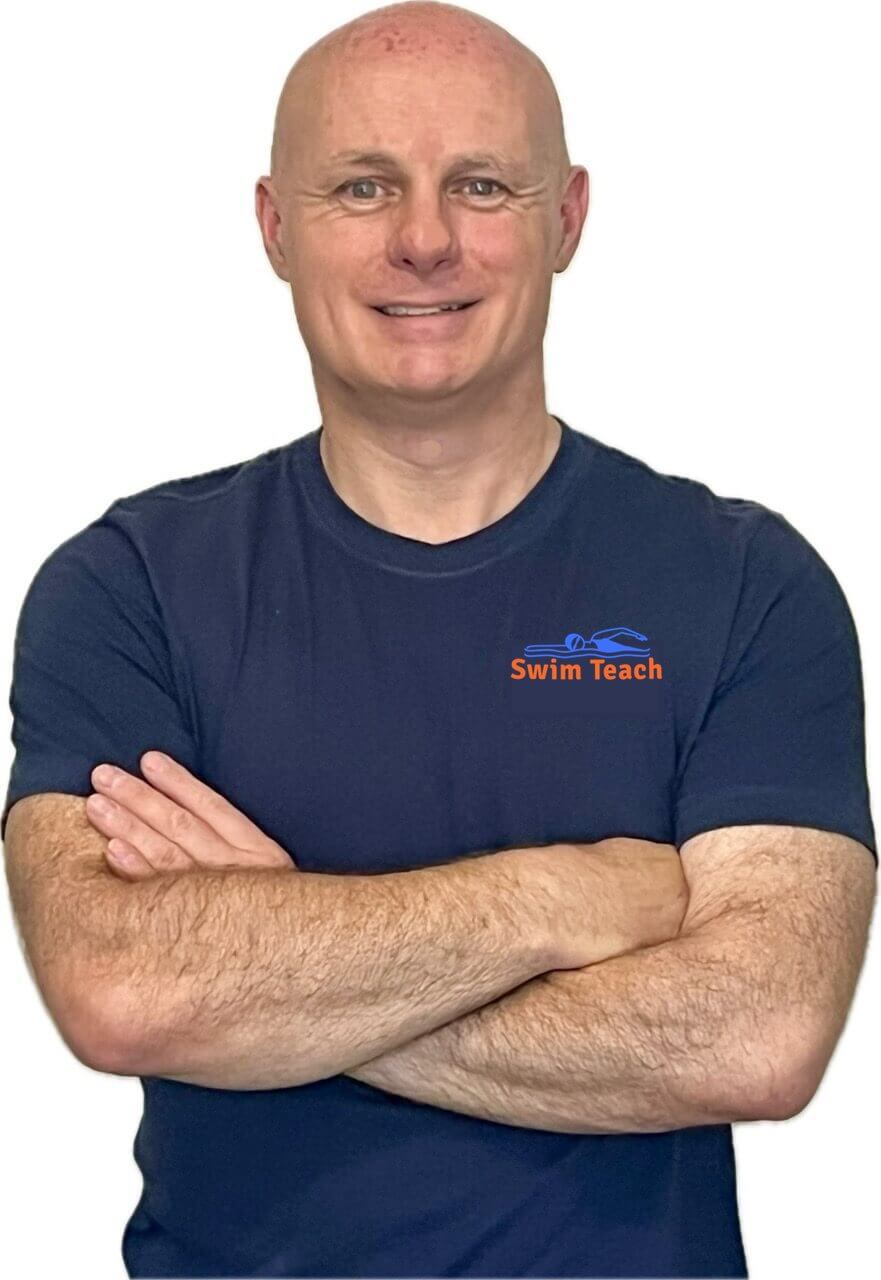
By Mark Young
If you're teaching adults to swim and wondering how to plan the first few lessons, you're in good company. Most swimming teachers are trained mainly with children in mind, and adults are a different job altogether. They're often nervous, usually self-conscious, and they want to know why they're doing something before they'll trust it.
Below are three complete adult beginner lesson plans I use, with timings, teaching points and how to organise each activity. Use them as they are, or adapt them to the swimmer in front of you. Underneath, I've added the things I've learned about planning lessons for adults over the years.
Need a full set of Adult Swimming Lesson Plans?
My Adult Lesson Plans take adult beginners from their first time in the water through to front crawl, breaststroke and backstroke, ready to print or use on your phone.
Sample lesson plan 1: getting used to the water
This is usually the very first lesson, and for some adults the first time they've been in a pool for years. The aim is simply to feel safe in the water. Don't be tempted to rush it. Some adults need two or three lessons at this stage, and that's completely normal.
Level: adult beginner · Previous learning: none · Equipment: buoyancy aids
| Activity | Teaching point | Organisation | Time |
|---|---|---|---|
| Entry: using the pool steps | take your time | all together | 1 min |
| Warm up: walking in waist-deep water, holding the poolside if needed | slowly at first | all together | 2 mins |
| Holding the poolside, sink down to submerge the shoulders | relax and breathe | all together | 2 mins |
| Walking into deeper water (up to shoulder depth if able) | take your time | all together | 3 mins |
| Holding the poolside, blow bubbles at the surface | breathe out slowly and gently | all together | 3 mins |
| Holding the poolside, hold the breath and submerge the mouth, then nose (eyes if comfortable) | relax and take your time | all together | 2 mins |
| Moving through the water at shoulder depth, blowing bubbles | raise the mouth to breathe in | all together | 3 mins |
| Moving at shoulder depth, changing direction and moving backwards | relax and take your time | all together | 3 mins |
| Contrasting activity: holding the poolside and kicking the legs | relax your knees and ankles | waves | 3 mins |
| Choose one exercise from this lesson to repeat | choose something you found tricky | one by one | 4 mins |
| Exit: using the pool steps | take your time | one by one | 2 mins |
| Total | 28 mins | ||
Sample lesson plan 2: floating and gliding
Once an adult is happy to put their face in, floating and gliding is the big turning point. It's often the lesson where they first realise the water will hold them up. Keep in mind that many adults are far more frightened of not being able to stand up again than of the float itself, so make sure they practise regaining their feet every time.
Level: adult beginner · Previous learning: used to the water and putting the face in · Equipment: woggles, floats and other buoyancy aids if needed
| Activity | Teaching point | Organisation | Time |
|---|---|---|---|
| Entry: using the pool steps | take your time | all together | 1 min |
| Warm up: moving through the water at shoulder depth, blowing bubbles | relax and blow | all together | 2 mins |
| Main theme: prone star float with buoyancy aids or teacher support as needed | face in the water | one by one | 3 mins |
| Push and glide towards the side and regain standing, with buoyancy aids as needed | legs together | waves | 3 mins |
| Push and glide away from the side and regain standing, with buoyancy aids as needed | stretch arms in front | waves | 3 mins |
| Supine star float with buoyancy aids or teacher support as needed | head back and relax | one by one | 3 mins |
| Push and glide on the back, away from the side | chest and hips up | waves | 3 mins |
| Mushroom float and regain standing | chin on chest | waves | 3 mins |
| Contrasting activity: push and glide adding kicking | slow relaxed kicks | waves | 3 mins |
| Choose one exercise from this lesson to repeat | choose something you found tricky | one by one | 4 mins |
| Exit: using the pool steps | take your time | one by one | 1 min |
| Total | 29 mins | ||
Sample lesson plan 3: front paddle
Front paddle brings the kick and a simple arm pull together for the first time, and it's usually the first time an adult actually travels through the water on their own. Expect a mix of delight and mild panic. Keep the buoyancy aids handy and the distances short.
Level: adult beginner · Previous learning: kicking, gliding and floating · Equipment: buoyancy aids as needed
| Activity | Teaching point | Organisation | Time |
|---|---|---|---|
| Entry: using the pool steps | take your time | all together | 1 min |
| Warm up: moving through the water at shoulder depth, blowing bubbles | relax and get used to the water | all together | 2 mins |
| Main theme: push and glide using buoyancy aids if needed | push off and stretch out | waves | 3 mins |
| Holding the poolside, kicking | relaxed knees and ankles | all together | 2 mins |
| Kicking using a float under each arm | floppy feet | waves | 3 mins |
| Walking through the water with arm actions | fingers together | all together | 2 mins |
| Kicking and pulling using a woggle | reach and pull | waves | 3 mins |
| Push and glide using a woggle, adding arm pulls and leg kicks | feel your way through the water | waves | 3 mins |
| Contrasting activity: supine star float | relax and stretch out | waves | 3 mins |
| Push and glide on the back, using buoyancy aids as needed | head back, chest and hips up | waves | 3 mins |
| Exit: using the pool steps | take your time | one by one | 2 mins |
| Total | 27 mins | ||
How I plan lessons for adult beginners
The structure is the same as any lesson: entry, warm up, main theme, contrasting activity, exit. What changes with adults is how you fill it.
Explain the why. Adults want to know why they're doing something. "We're blowing bubbles so you never have to hold your breath while you swim" gets far more effort than "blow bubbles". It takes ten seconds and it pays you back all lesson.
Teach standing up early. One of the most common fears I see is not being able to get back on their feet. Until an adult knows they can stand up from a float on the front and the back, they'll stay tense, and a tense body sinks.
One or two skills per lesson. Adults often try too hard and overthink everything. Keep the main theme narrow and let them practise it properly.
Give them a choice. You'll notice my plans end with "choose one exercise to repeat". Letting an adult pick something they found tricky gives them a bit of control, and it tells you a lot about how they're feeling.
Keep them warm. Adults get cold and tense quickly when they're standing still. Keep the waiting short and the activities moving.
A typical progression for adult beginners
Every adult moves at their own pace, but most follow roughly this order. The three sample plans above cover stages 1, 3 and 5.
- Getting used to the water: walking, submerging the shoulders, holding the side
- Breathing and putting the face in: bubbles, submerging the mouth, nose and eyes
- Floating and gliding, and standing up again from both
- Kicking, holding the side and then with floats
- Front paddle: kick and arm pull together, with a woggle at first
- A first stroke: many adults prefer breaststroke first, because the head can stay up
Don't move an adult on until they're relaxed at the stage they're on. Going back a step isn't failure; it's how trust gets built. There's more on the whole process in my guide to teaching swimming lessons to beginners.
Nervous adults, groups and private lessons
These plans work for one-to-one and small group lessons. With groups, I'd keep adult beginners to around three to six, so you can stay close to anyone who's nervous. In private lessons you can move faster or slower than the plan says, so treat the timings as a guide rather than a rule.
If you have a very nervous adult, it's worth asking about their past before they get in. Many have one bad experience they've carried for years, and knowing about it changes how you teach them. I've written more about this in my guide to teaching adults to swim, and if your swimmer is worried they've left it too late, point them to can adults learn to swim.

Teaching Adults How To Swim
Unlock the art of adult instruction and overcome the challenges of adult swimming lessons.
Transform your teaching methods and enjoy the satisfaction of your learners' progress (click here for a preview).
Don't miss out! Click here to check it out!
Common questions
How long should an adult swimming lesson be?
My plans are around 30 minutes, which suits most adult beginners. Longer lessons can work for confident adults, but nervous beginners often tire or get cold, and they learn less, not more.
How many lessons does it take an adult to learn to swim?
It varies a lot. Some adults swim a short distance within a handful of lessons; very nervous adults may need much longer at the early stages. Regular lessons and some practice in between make the biggest difference.
Should adults learn front crawl or breaststroke first?
Many adults prefer breaststroke first because they can keep their head out of the water. Others find front crawl easier once they're happy putting their face in. Follow the swimmer.
Do I need to be qualified to use these plans?
Yes. These plans are written for qualified swimming teachers, delivering lessons as part of an organised swimming school or club, with proper safety cover.
Can I print them?
Yes. The full Adult Lesson Plans are a PDF you can print or use on your phone or tablet on poolside.
For your next adult lesson
Pick one of the plans above and try one small change: before each activity, tell your swimmer in one sentence why they're doing it. It sounds like nothing, but it's one of the quickest ways to turn a tense adult into a willing one.
Adults who learn to swim later in life are some of the most rewarding people you'll ever teach. Take your time with them. It's worth it.

 |
Thanks for checking out my website and all the information here about learning to swim and teaching swimming. I really hope you have found some inspiration and support. If you're as passionate about teaching swimming and learning to swim as I am, feel free to follow me on any of these channels: Cheers!  |
Thanks for checking out my website and all the information here about learning to swim and teaching swimming. I really hope you have found some inspiration and support.
If you're as passionate about teaching swimming and learning to swim as I am, feel free to follow me on any of these channels:
Cheers!
All Rights Reserved