- Swim Teach Home
- teaching tips
- Managing Parents Swimming Lessons
- Calm Poolside
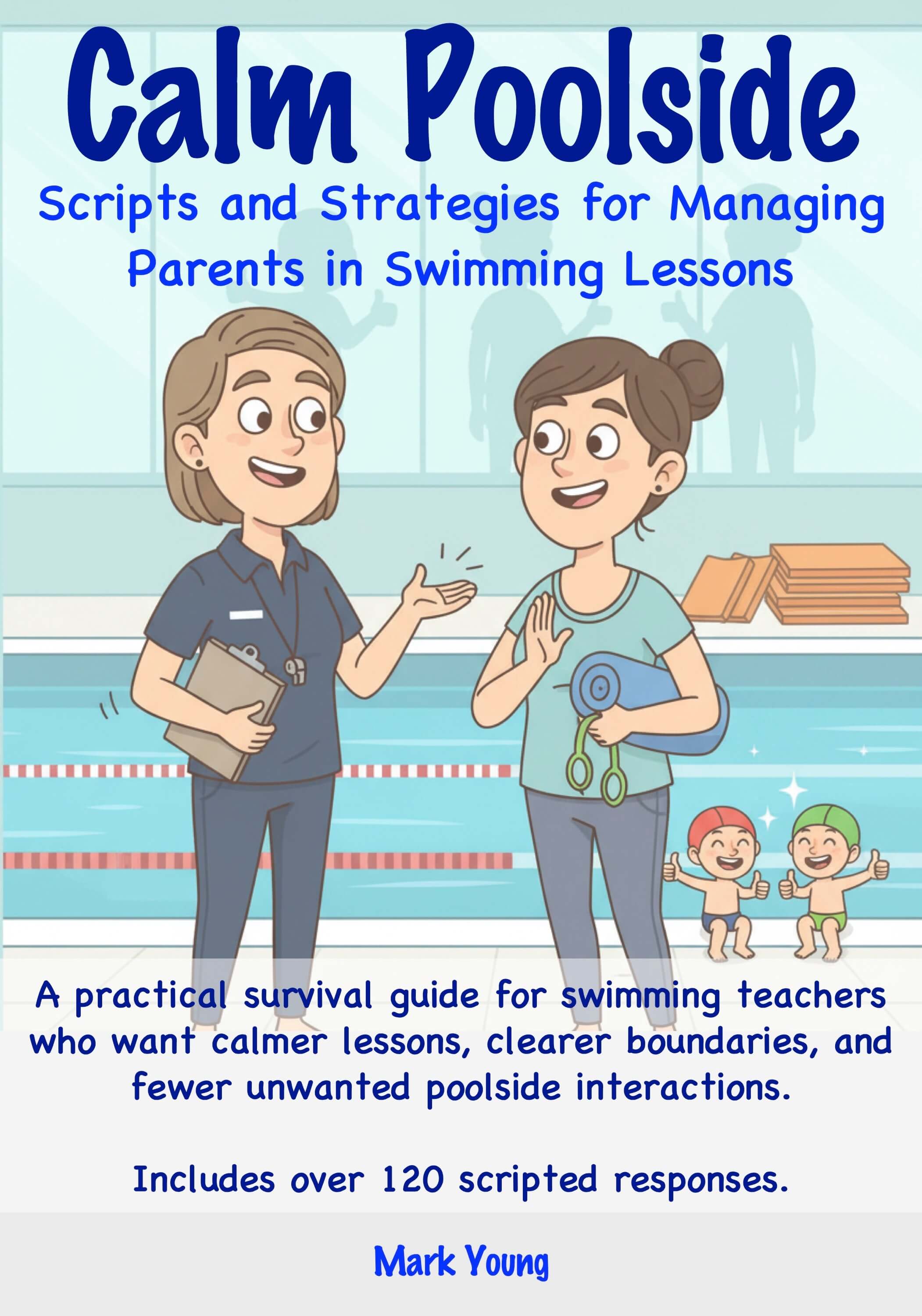
Calm Poolside
Scripts and Strategies for Managing Parents in Swimming Lessons
A practical survival guide for swimming teachers who want calmer lessons, clearer boundaries and fewer unwanted poolside interactions.
Includes over 120 scripted responses.
The hardest part of teaching swimming is not always the swimming
You can plan the lesson. You can teach the strokes. You can support the nervous beginner. You can manage the group.
But then comes the parent on poolside.
The one who shouts instructions. The one who repeats everything you say. The one who wants their child moved up because they “did it on holiday”. The one who questions your behaviour management. The one who arrives late and still expects the full lesson. The one who starts with: “Can I just quickly ask...”
If you have ever smiled politely while silently asking the universe for patience, this book was written for you.
What this book helps you do
Calm Poolside gives swimming teachers the words, structure and confidence to manage parent communication professionally.
Not by blaming parents.
Not by becoming cold or unapproachable.
Not by arguing on poolside.
But by using clear scripts, simple frameworks and calm boundaries that protect the lesson.
You will learn how to:
- Stop parent interruptions without sounding rude
- Explain why one voice matters during lessons
- Handle pushy progression requests
- Talk about behaviour as a safety issue
- Set expectations before the first lesson
- Manage anxious or over-involved parents
- Move difficult conversations away from poolside
- Protect your confidence when you feel watched or challenged
- Build better parent relationships without letting parents take over
The main feature: over 120 scripts
This is not vague advice. It is not “just be more confident”. It is a practical script book for real swimming lesson situations.
For example:
When a parent shouts instructions. When a parent repeats everything you say. When a parent asks why their child has not moved up. When a parent challenges behaviour management. When a parent tries to talk during the lesson
“I know you’re trying to help, but it’s easier for them if they only hear one voice. I’ll guide them through it.”
“Thank you - I’ve got them. They’re learning to respond to my voice in the water, so I need them listening just to me.”
“They’re making good progress. Before moving up, I need to see that they are safe, confident, consistent and independent.”
“In the water, listening is a safety skill. I need all swimmers following instructions so the lesson is safe and fair.”
“I need to keep my focus on the swimmers right now. Please catch me after the lesson or send a message and I’ll respond properly.”
These are the kinds of phrases you can actually use when you are on poolside, mid-lesson, with children in the water and the next class waiting.
What is inside Calm Poolside?
Why parent management can feel like the hidden challenge of teaching swimming.
Understanding fear, love, impatience, misunderstanding and lack of boundaries.
The Shouter, The Repeater, The Helicopter, The Pushy Progress Parent and more.
Why one clear voice matters and how parent anxiety can affect the child.
Welcome messages, viewing expectations and parent roles before problems start.
Practical scripts for shouting, repeating, correcting, questioning and hovering.
How to explain behaviour as safety and respond when parents disagree.
Scripts for “when are they moving up?”, comparisons and “they did it on holiday”.
Default phrases, boundaries and support when parent interactions feel overwhelming.
Viewing policies, one-voice policies, communication routes and progression clarity.
How to turn parents into allies without letting them become second instructors.
A practical reminder that clear boundaries create calmer lessons.
This book is for you if...
Format
Why it matters
Swimming teachers are expected to teach confidently, manage groups, keep children safe, communicate with parents and stay calm under pressure.
That is a lot.
Especially when parent conversations happen at the worst possible time.
This book gives you language you can rely on.
Because sometimes one calm sentence is enough to change the whole lesson.
“One voice helps children learn.”
“In the water, listening is a safety skill.”
“The next step needs to feel successful, not overwhelming.”
Clear words. Clear boundaries. Calmer poolside.
Ready to feel more confident with parents?
Download your copy of Calm Poolside today and start using the scripts in your next lesson.

 |
Thanks for checking out my website and all the information here about learning to swim and teaching swimming. I really hope you have found some inspiration and support. If you're as passionate about teaching swimming and learning to swim as I am, feel free to follow me on any of these channels: Cheers!  |
Thanks for checking out my website and all the information here about learning to swim and teaching swimming. I really hope you have found some inspiration and support.
If you're as passionate about teaching swimming and learning to swim as I am, feel free to follow me on any of these channels:
Cheers!
All Rights Reserved