- Swim Teach Home
- teaching tips
- Managing Parents Swimming Lessons
How Swimming Teachers Can Manage Parents on Poolside
By Mark Young
Teaching swimming is not just about teaching swimming.
That sounds obvious once you have spent any time on poolside, but it is not always what new teachers expect.
You train to teach body position, kicking, breathing, floating, rotation, water confidence, stroke technique and water safety. You expect nervous beginners. You expect excited children. You expect the occasional child who seems to run entirely on chlorine, noise and unpredictable movement.
What many swimming teachers do not expect is that one of the hardest parts of the job can be managing the adults watching from the side.
Parents.
Not because parents are bad people. Not because swimming teachers dislike them. And not because families should not be involved.
But because parent behaviour can have a very real effect on a swimming lesson.
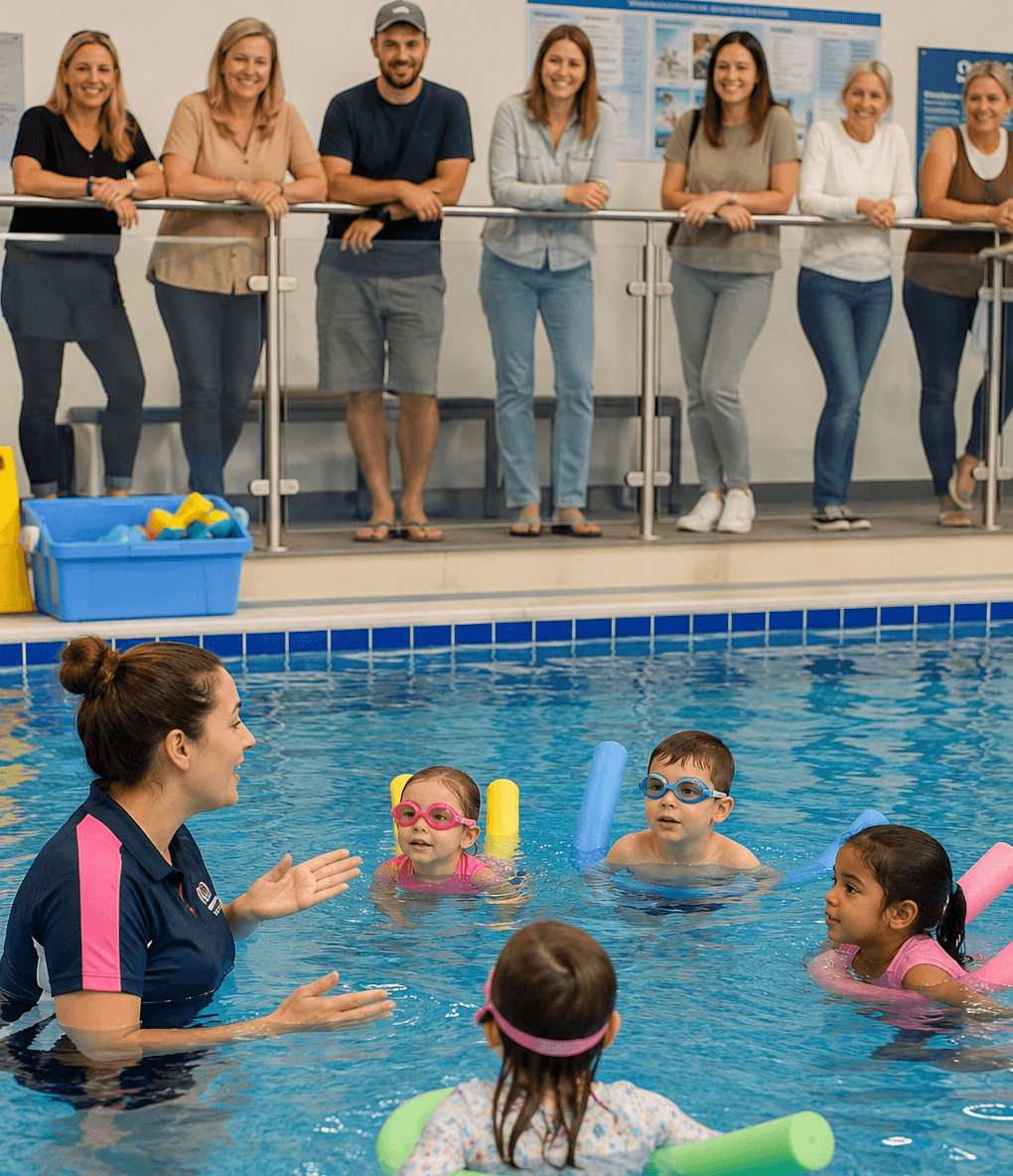
- The parent who shouts instructions.
- The parent who repeats everything you say.
- The parent who wants their child moved up before they are ready.
- The parent who questions your behaviour management.
- The parent who stands too close.
- The parent who arrives late and still expects the full lesson.
- The parent who is anxious around water and passes that anxiety straight to their child.
Sound familiar?
Why parents can make swimming lessons harder
Most parents are not trying to make your job difficult. Often, they are trying to help. The problem is that their version of helping does not always help.
A parent shouting “Kick your legs!” may believe they are supporting their child. But if you are teaching a still float, they have just given the opposite instruction.
A parent repeating every word you say may feel as though they are backing you up. But the child may start listening for their parent’s voice instead of yours.
A parent asking “When are they moving up?” every week may simply want reassurance. But it can put pressure on you, the child and the lesson structure.
This is why swimming teachers need clear language, clear expectations and clear boundaries. Not harsh boundaries. Professional boundaries. The kind that protect the child’s learning, the teacher’s confidence and the flow of the lesson.
One voice helps children learn
One of the simplest messages you can give parents is this:
“One voice helps children learn.”
In a swimming lesson, children are already processing a lot.
They are listening to instructions, moving in the water, watching demonstrations, managing their nerves, waiting for their turns, remembering skills, and staying safe.
When a parent also calls instructions from the side, the child now has two instructors.
That can create confusion.
A useful script is:
“I know you’re trying to help, but it’s easier for them if they only hear one voice. I’ll guide them through it.”
This works because it does not attack the parent. It assumes positive intent, explains the reason and redirects them to a better role.
Need the exact words to say to parents?
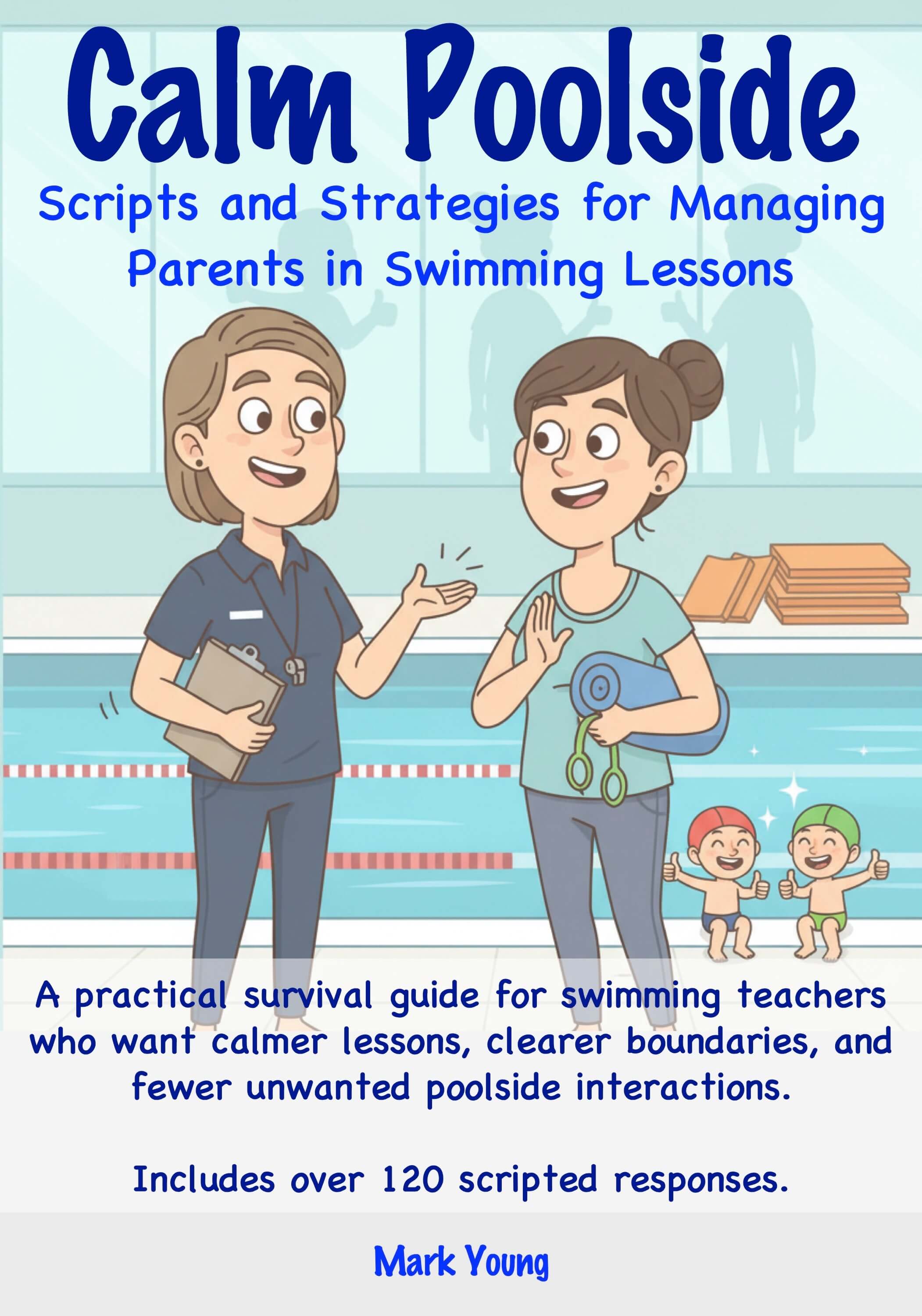
I have written a practical guide for swimming teachers called Calm Poolside: Scripts and Strategies for Managing Parents in Swimming Lessons.
It includes over 120 scripted responses for real poolside moments, including parent interruptions, progression questions, behaviour disagreements and anxious parents.
Behaviour is a safety issue
Behaviour management in swimming lessons is different from behaviour management on land.
In the pool, listening is not just about manners. It is about safety.
That is why one of the most useful phrases a swimming teacher can use is:
“In the water, listening is a safety skill.”
This sentence can completely change the tone of a conversation.
If a parent says, “They were just excited,” you can reply:
“I completely understand. We want them to enjoy the lesson. I just need to make sure the excitement stays safe and does not stop others learning.”
If a parent questions why their child sat out for one turn, you can explain:
“I gave two reminders about staying on the wall. When they left again, I sat them out for one turn so we could keep everyone safe. They rejoined after that and did much better.”
That is calm. Clear. Professional.
No drama required.
Progression needs better explanation
Few questions make swimming teachers tense quite like:
“When are they moving up?”
Parents often measure swimming progress by distance.
Can they swim five metres?
Can they swim ten metres?
Can they get across the pool?
Distance matters, but it is not the whole picture.
A child may manage a skill once, but still not be ready for the next group. Teachers are also looking at confidence, safety, consistency, independence, listening skills, stamina and emotional readiness.
A helpful progression phrase is:
“They’re making good progress. Before moving up, I need to see that they are safe, confident, consistent and independent.”
This gives parents something concrete to understand.
It also protects the child from being moved up too soon and then feeling overwhelmed.
Fast progress feels exciting. Secure progress lasts.
Set expectations before problems start
The easiest parent behaviour to manage is the behaviour you prevent.
Parents should know before lessons begin:
- Where they should watch from
- Whether they can speak to children during lessons
- When and how to ask questions
- How progress is assessed
- How behaviour is managed
- What happens if they arrive late
- What their role is during the lesson
A simple parent message can make a big difference:
“Before the lesson, encourage. During the lesson, observe. After the lesson, praise.”
That gives parents a useful role without allowing them to take over.
Teachers need words they can actually use
Most swimming teachers do not need a lecture on being more confident. They need the right words at the right moment.
Because parent conversations rarely happen when everything is calm and convenient. They happen when six children are in the water, the next class is waiting, someone’s goggles have snapped and a parent starts with:
“Can I just quickly ask...”
That is why having prepared scripts matters.
Scripts reduce panic. They stop you from overexplaining. They help you stay professional when you feel watched, challenged or put on the spot.
You do not need perfect words every time.
You need calm words, clear boundaries and consistent follow-through.
Need the exact words to say to parents?
I have written a practical guide for swimming teachers called Calm Poolside: Scripts and Strategies for Managing Parents in Swimming Lessons.
It includes over 120 scripted responses for real poolside moments, including parent interruptions, progression questions, behaviour disagreements and anxious parents.

 |
Thanks for checking out my website and all the information here about learning to swim and teaching swimming. I really hope you have found some inspiration and support. If you're as passionate about teaching swimming and learning to swim as I am, feel free to follow me on any of these channels: Cheers!  |
Thanks for checking out my website and all the information here about learning to swim and teaching swimming. I really hope you have found some inspiration and support.
If you're as passionate about teaching swimming and learning to swim as I am, feel free to follow me on any of these channels:
Cheers!
All Rights Reserved