- Swim Teach Home
- teaching tips
- poolside communication phrases
Poolside Communication Phrases for Swimming Teachers
What to say when a swimmer does not understand
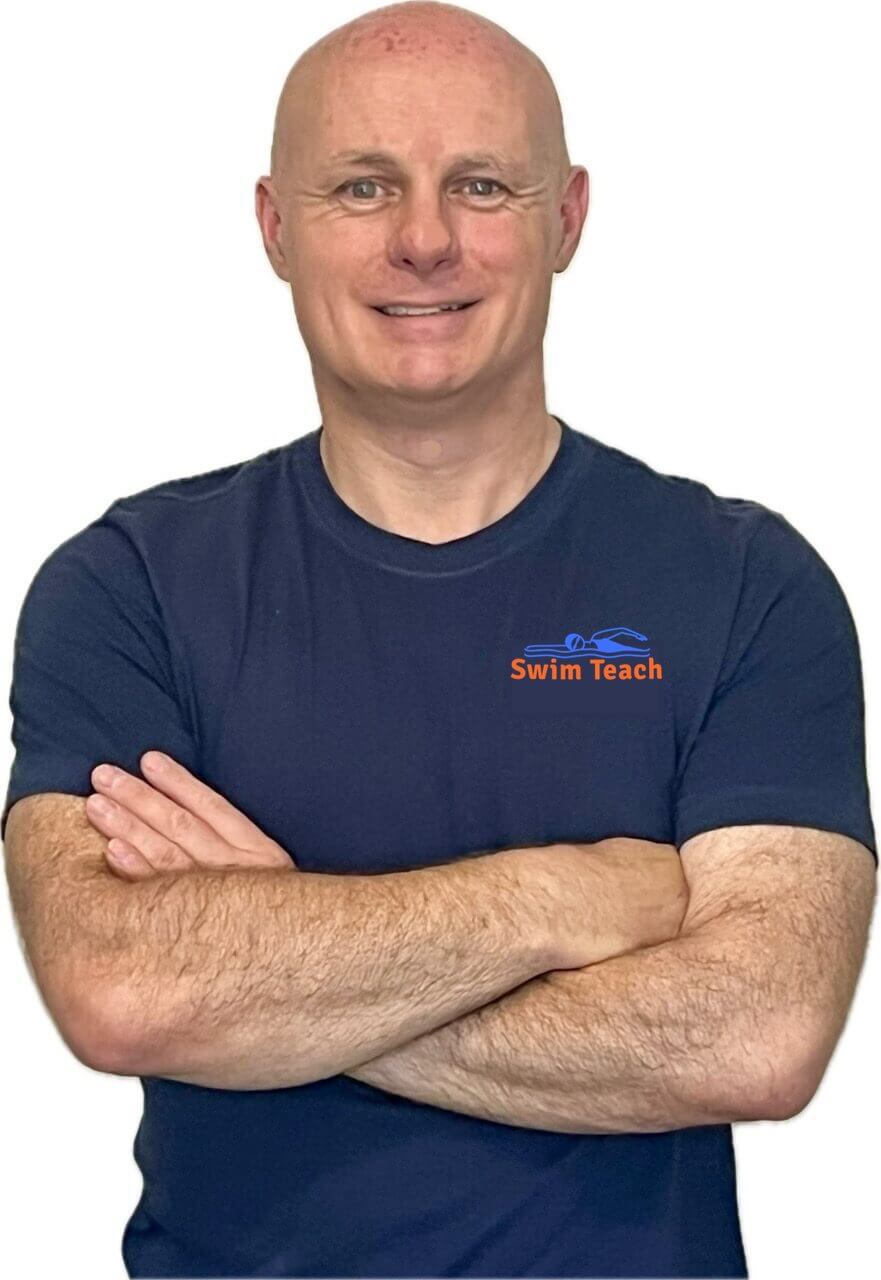
By Mark Young
When a swimmer does not understand, the best poolside communication phrases are short cues that match the barrier in front of you - confusion, poor timing, weak body awareness, or anxiety. Instead of repeating the same instruction, change the route into the skill. This article shows how to switch between direct, image-based, feel-based, rhythm-based, and reassuring cues for floating, breaststroke kick, face immersion, and push-and-glide.
You can explain a skill clearly, demonstrate it well, and still watch a swimmer show no sign that the message has landed. In those moments, poolside communication phrases matter more than longer explanations because the issue is often not the skill itself but how the cue is received. One swimmer may respond to a direct instruction, while another needs a shape, a rhythm, a feeling, or calmer wording that lowers tension.
So before you change the task, change the language. The sections below show how that works in push-and-glide, floating, breaststroke kick, and face immersion. They also give you a simple way to choose a better cue in the moment.
Why repeating the same instruction rarely helps
When a swimmer is struggling, it is tempting to repeat the original instruction more slowly, more loudly or several more times.
The difficulty is that the swimmer is still receiving the same information in essentially the same form.
Instead, change the route into the skill:
- Shorten the instruction if the swimmer is overloaded.
- Use an image if technical language is not connecting.
- Introduce a rhythm when coordination or timing is the problem.
- Use a feel-based cue to direct attention to the movement.
- Soften the language when fear or tension is getting in the way.
- Give one correction at a time rather than several together.
Clear poolside communication is not about finding one perfect phrase. It is about having several ways to explain the same action.
One skill - several ways to explain it
Consider a swimmer who is struggling to maintain a streamlined position during a push and glide.
You could try:
Direct instruction:
“Hands together and arms close to your ears.”
Shape cue:
“Make one long, narrow line.”
Imaginative cue:
“Turn your body into an arrow.”
Feel-based cue:
“Feel your arms gently squeezing the sides of your head.”
Sequence cue:
“Hands together, arms squeeze, push and hold.”
The goal has not changed. Only the language has changed.
One of these phrases may immediately make more sense to that particular swimmer.
Example: helping a swimmer to float
“Relax” is one of the most common instructions used in swimming lessons - but it is difficult to perform on demand, particularly when the swimmer is already anxious.
Instead of repeatedly saying “relax”, try giving the swimmer something clearer to do or notice:
- “Let the water hold you.”
- “Make your body long and quiet.”
- “Rest your head back into the water.”
- “Keep the shape still for one second.”
- “Feel the water underneath your shoulders.”
- “Do less and let the water do more.”
For a nervous swimmer, combine the phrase with reassurance:
“I am supporting you. We are only holding this for one second.”
This gives the swimmer an action, a sensation and a clear limit.
Example: improving breaststroke leg kick
A long technical explanation can overload a swimmer, especially when they are trying to coordinate several parts of the movement.
Try changing the type of cue:
Direct:
“Heels up, feet out, kick round and together.”
Short:
“Up, out, round, snap.”
Feel-based:
“Feel the soles of your feet press the water backwards.”
Shape-based:
“Make a small circle with your feet.”
Timing-based:
“Kick, squeeze, then glide.”
If the kick is still not working, identify the particular problem rather than repeating the entire sequence. Are the heels staying low? Are the feet failing to turn out? Is the swimmer rushing into the next kick?
The most useful phrase is the one that addresses the problem happening at that moment.
Example: helping a nervous swimmer put their face in the water
Fear needs different language from a technical fault.
Instead of:
“Just put your face in. There’s nothing to worry about.”
Try:
- “Start with just your chin.”
- “You decide when you are ready.”
- “Let’s blow across the surface first.”
- “Try one small bubble, then stand up.”
- “We are only going as far as feels manageable.”
- “Use your own hands to put a little water on your face.”
These phrases reduce the size of the task and return some control to the swimmer.
A simple poolside checklist
When your first explanation does not work, ask yourself:
- Can I say it in fewer words?
- Can I give the swimmer one action instead of three?
- Can I turn it into a picture or shape?
- Can I add a rhythm?
- Can I direct attention to what the movement should feel like?
- Is fear or tension the real barrier?
- Can I demonstrate it from a different angle?
- Am I correcting the actual problem I can see?
Sometimes one small change of phrase is enough to unlock the whole skill.
Build a wider poolside vocabulary
After more than 30 years of teaching swimming, I have learned that progress does not always come from changing the exercise.
Often, it comes from changing the explanation.
That is why I created The Swimming Teacher’s Phrase Book: Quick Cues and Alternative Phrases for When Swimmers Get Stuck.
It contains hundreds of practical phrases covering water confidence, floating, submersion, push and glide, all four strokes, deep-water skills, survival skills and common teaching problems.
Every section gives you several ways to approach the same teaching moment—including direct, reassuring, imaginative, feel-based and rhythm-based cues.
Discover The Swimming Teacher’s Phrase Book here
Click on the cover image to preview example pages from the book


 |
Thanks for checking out my website and all the information here about learning to swim and teaching swimming. I really hope you have found some inspiration and support. If you're as passionate about teaching swimming and learning to swim as I am, feel free to follow me on any of these channels: Cheers!  |
Thanks for checking out my website and all the information here about learning to swim and teaching swimming. I really hope you have found some inspiration and support.
If you're as passionate about teaching swimming and learning to swim as I am, feel free to follow me on any of these channels:
Cheers!
All Rights Reserved