- Swim Teach Home
- Going Underwater
Going Underwater
Boost your swimming confidence
Does the thought of going underwater completely freak you out? Your heart rate starts to rise as the doubts and fears creep into your head. You know deep down that you have to get over this if you're going to overcome your fear of swimming and increase your swimming confidence.
Fear not. Work through the 3 steps detailed here and your confidence will sky-rocket.
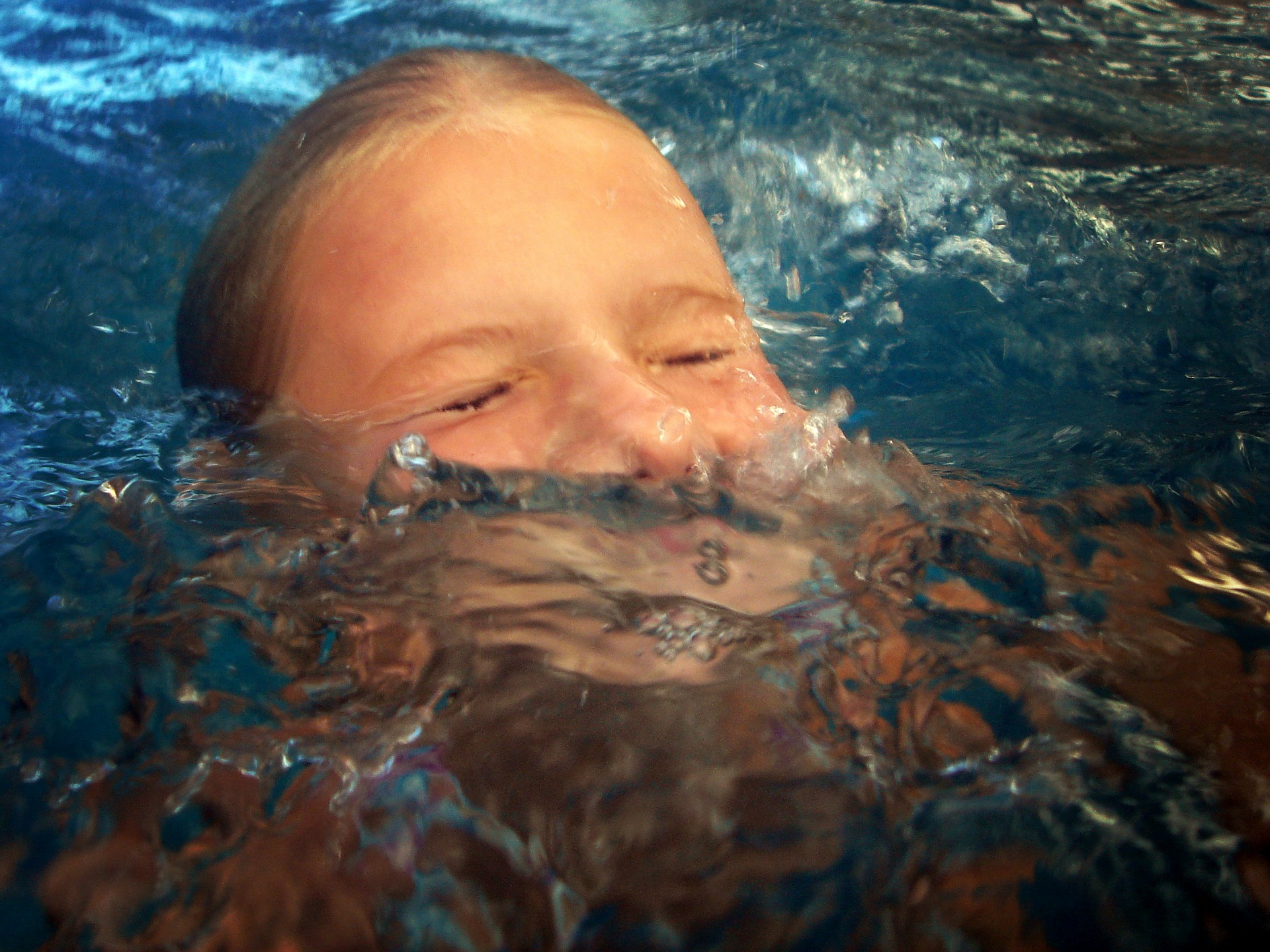
The more relaxed you are in the water, the less oxygen is used by your body and then the length of time spent underwater increases.
The ability to submerge the face is arguably one of the most important stages when learning to swim, particularly when overcoming a fear of water.
Some beginners arrive with this ability built-in and only need to be taught how to breathe whilst swimming. For others it will be one of the most terrifying tasks you face.
Learning how to go underwater goes hand-in-hand with learning to relax in the water. Get used to submerging and you will be more relaxed as you swim. Become more relaxed and you will be more comfortable with going underwater. It's a natural cycle of progression. For more about learning to relax in the water, click here.
Three Stages To Going Underwater
There are 3 key steps to work through to become confident with going underwater. These are crucial for beginners or those with a fear of swimming. Others will find them easy. The 3 steps are:
- Getting the face wet
- Taking a breath and partially submerging
- Total submersion underwater
It goes without saying that a gradual approach is needed here. One stage at a time and only when you are happy and confident do you proceed to the next stage.
Stage 1: Getting the face wet
Remember, getting the face wet and being splashed in the face are two completely different concepts, each having different effects, and not always positive ones. Here are a few practices to work through:
- Blowing bubbles on the water surface or blowing an object along as you swim. You can either blow gently "like blowing through a straw" or blow with force "like blowing out candles on a cake".
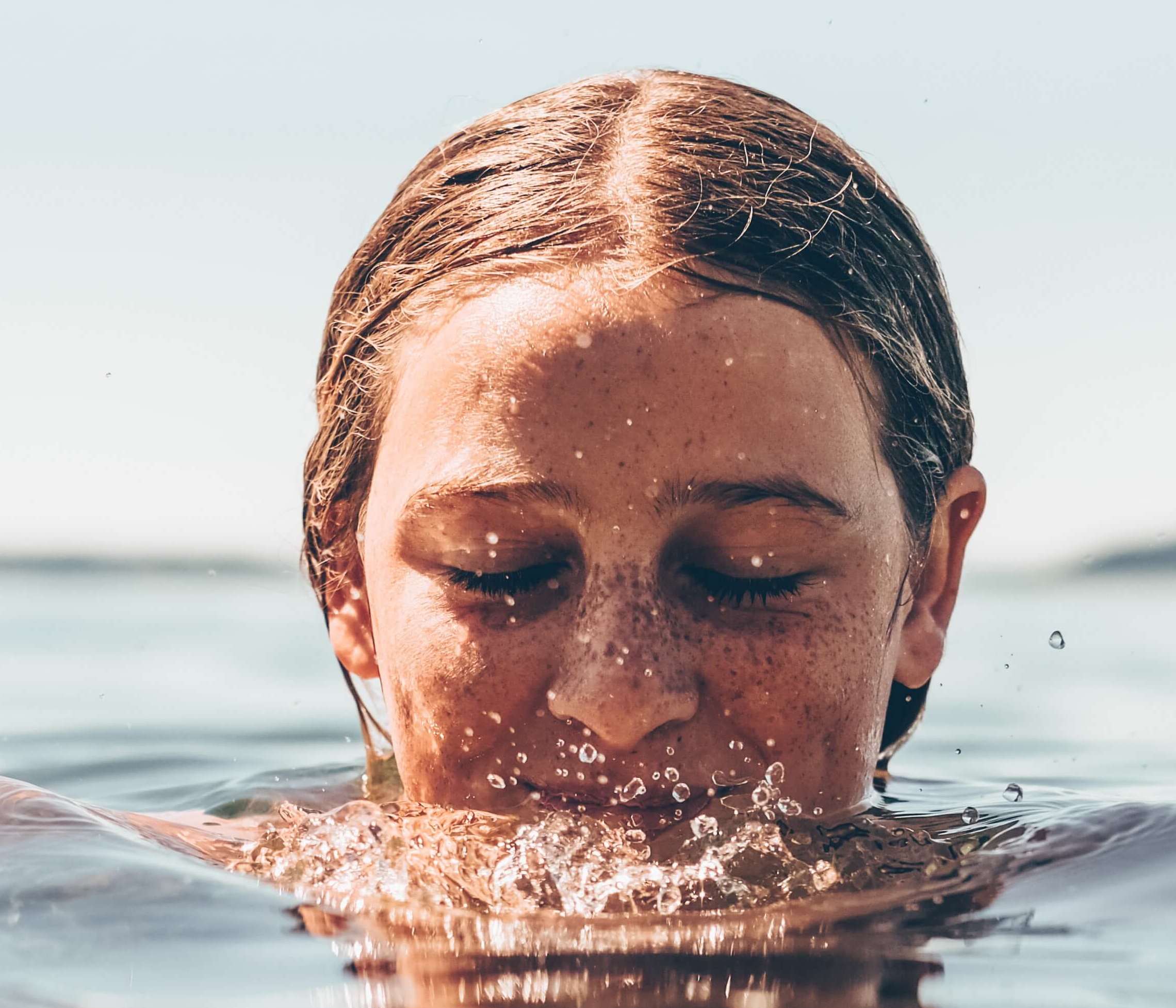
- Cupping water in your own hands and throwing it onto your face. Remember to hold your breath as you do, so as not to get water up your nose.

- Throwing and catching a ball is an excellent distraction from the splashes of the water. If the ball is made to land just in front of you, this will result in a wet face without too much concern due to the distraction of catching the ball. The smallest of splashes from the softest of throws will be sufficient to have a positive effect.
Stage 2: Partially submerging the face
For the next stage of mastering going underwater, you need to learn how to hold your breath by "breathing in and holding it all in". Some will be able to do this easily, others will learn by trial and error as you partially submerge your face and realise you are not able to breathe underwater!
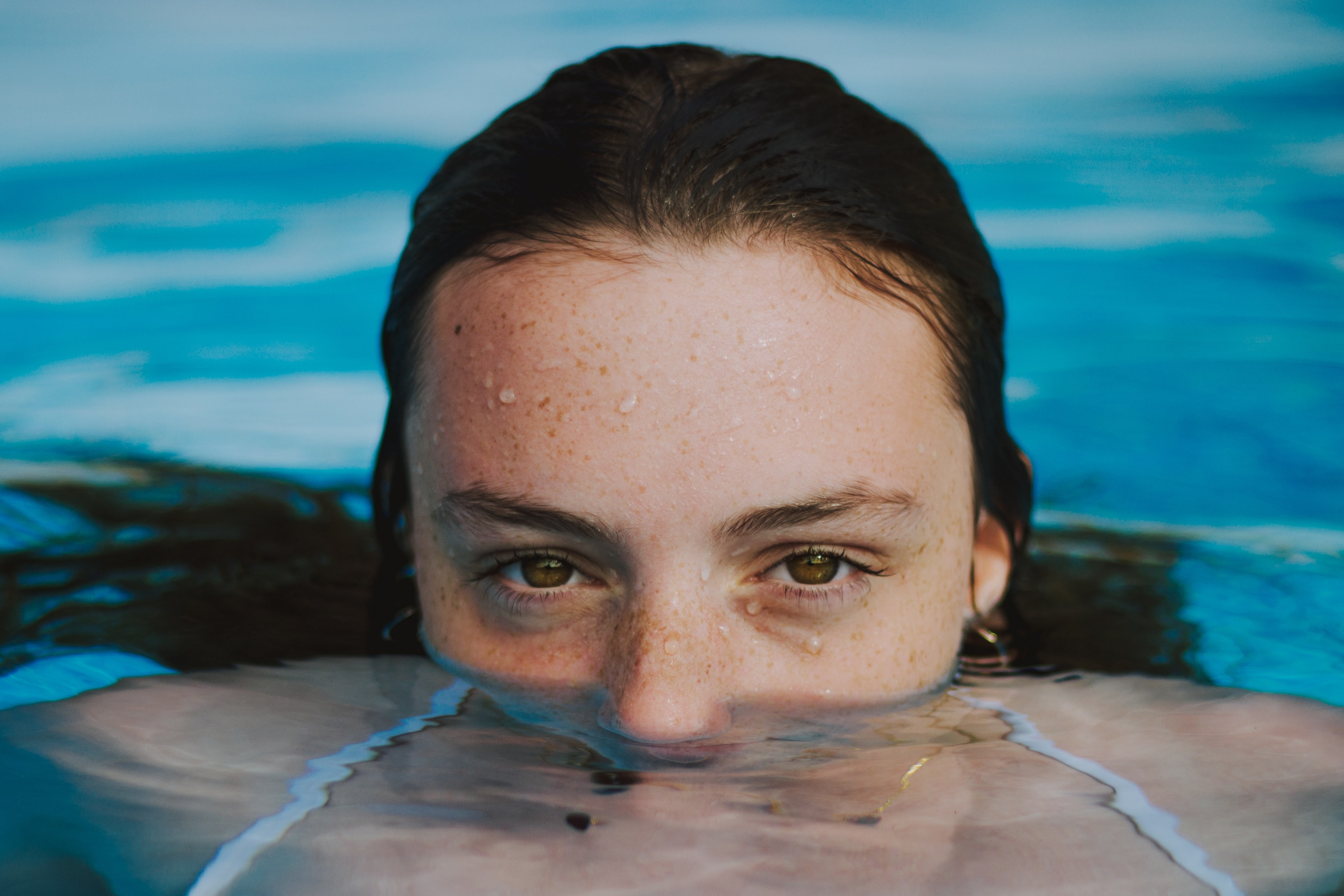
An object can then be placed just under the water surface, shallow enough to see and reach for it, but deep enough for the mouth to be submerged in order to reach it. Once confidence is gained with this exercise, then the object can be lowered slightly to encourage the mouth and nose to be submerged.
These practices are best performed with an assistant in the water holding the object for you. This may also help enhance your confidence with someone in the water with you.
Stage 3: Total Submersion and Swimming Underwater
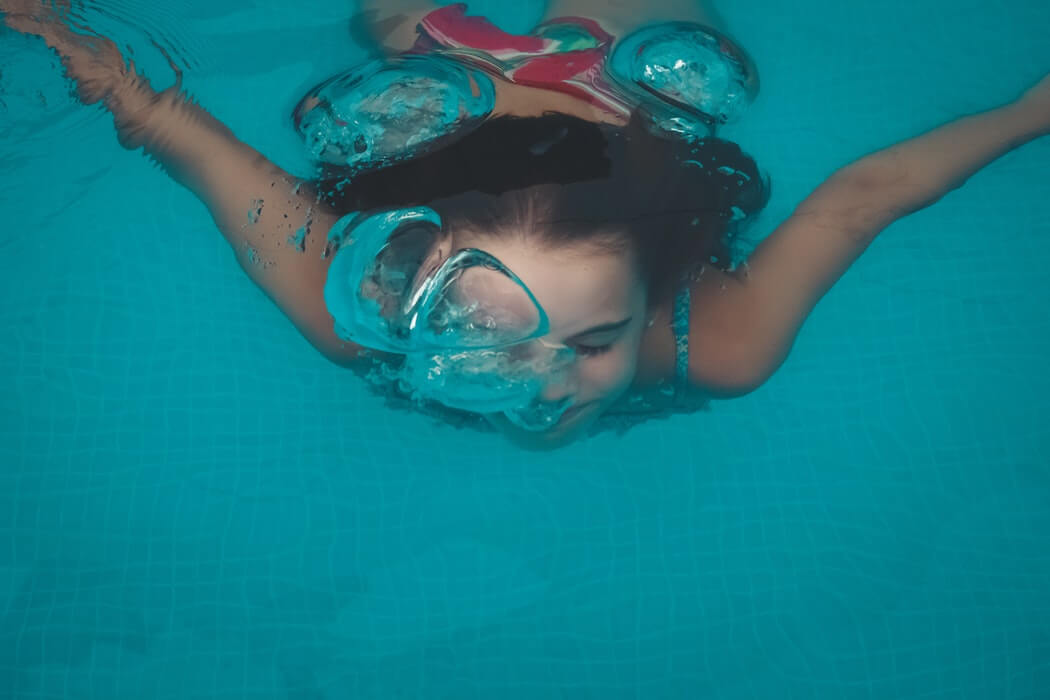
Stage 2 naturally leads quickly onto stage 3 where the object is placed below the water surface where you are encouraged to retrieve it by completely submerging your head underwater. By this stage, breath holding should be more accomplished and you should begin to relax more as you submerge. Eventually swimming underwater becomes a natural progression.
Progression from this stage is to incorporate face submerging, either partially or completely, whilst swimming various strokes and even retrieving objects from the pool floor during lengths or widths.
Now it's time to give your confidence a REAL boost...
All of the above stages assist hugely with the process of increasing swimming confidence and overcoming a fear of swimming. Understanding how well you float, how to glide and how and when to breathe are crucial steps too. Find all of these in my massively popular book 'The Complete Beginners Guide to Swimming'.
Click below to download your copy, or click here for more details.
I am a member of the Amazon Associates Program and I will earn a commission from qualifying purchases at no extra cost to you.
|
Buy a PRINTED copy from: |
 |
|
You can also download from: |
 |
 |
Real-Life Questions and Answers
Going Underwater Without Holding Your Nose. 'My question is about going underwater without holding your nose. This is something I've never been able to do. Water always goes up my nose and into my sinuses.'
I need to some help with learning to put my face in the water. 'Learning how to put your face in the water can sometimes be scary when learning how to swim. The best thing to do, if it is something that you find challenging, is to approach it in stages.'
 |
Thanks for checking out my website and all the information here about learning to swim and teaching swimming. I really hope you have found some inspiration and support. If you're as passionate about teaching swimming and learning to swim as I am, feel free to follow me on any of these channels: Cheers!  |
Thanks for checking out my website and all the information here about learning to swim and teaching swimming. I really hope you have found some inspiration and support.
If you're as passionate about teaching swimming and learning to swim as I am, feel free to follow me on any of these channels:
Cheers!
All Rights Rserved